
Ad blocking, built in
Filter lists run in the main process, not as an extension. Nothing to find, install, and entrust to a stranger.
A browser that remembers nothing you didn't hand it. Ad blocking, a password vault and sleeping tabs are built in — not bolted on.
Version 1.0.0 · macOS and Windows · What's new?
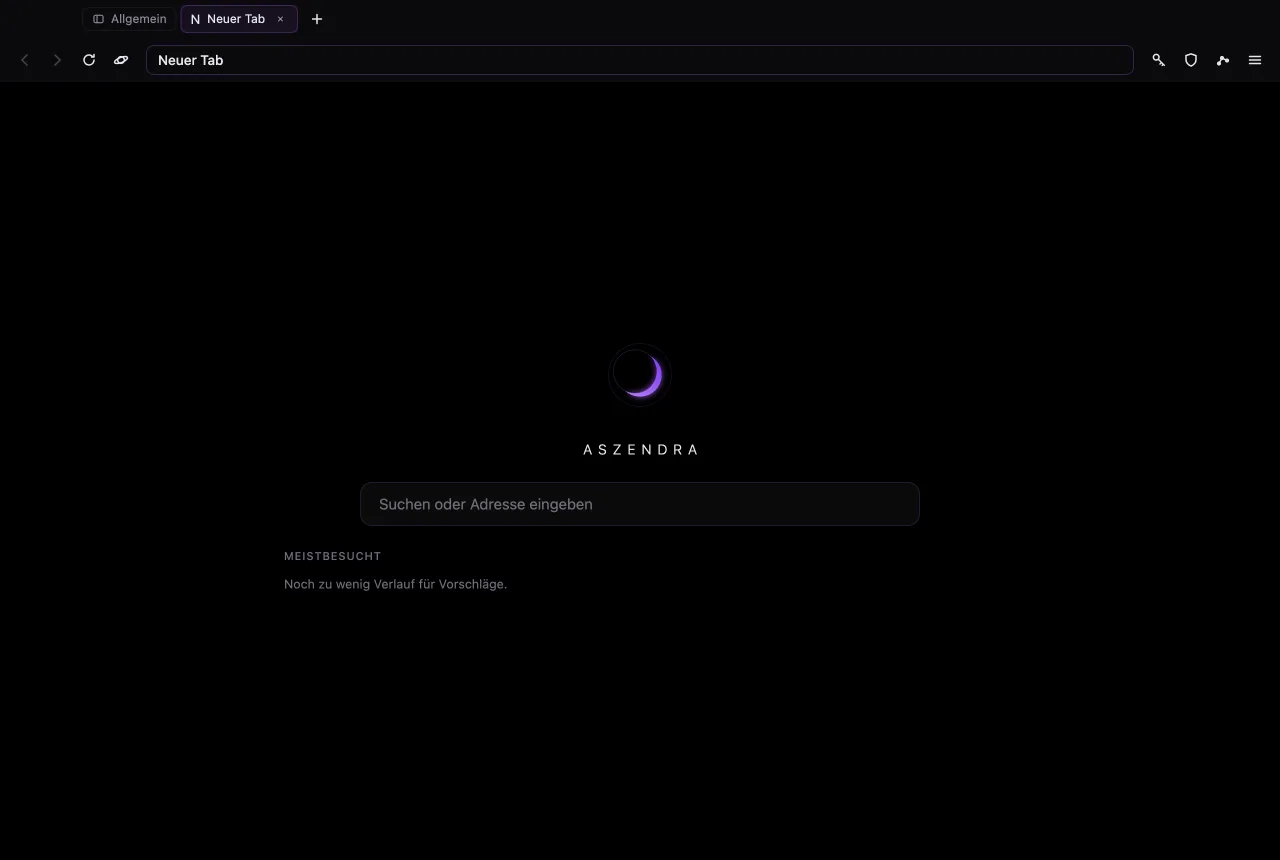
Filter lists run in the main process, not as an extension. Nothing to find, install, and entrust to a stranger.
The vault is a separate Rust program, not a module inside the browser. Argon2id and XChaCha20-Poly1305 — and no npm package shares memory with your passwords.
After twenty idle minutes a background tab gives its memory back and keeps its history. Forty tabs start as fast as one.
Every open tab as a star map: the active one at the centre, lines between the tabs that opened one another. Sleeping tabs sit dimmed, but visible.
Ctrl+Tab opens a star map of every open tab. The active
one sits at the centre, everything else in rings around it — and
lines connect the tabs that opened one another. Where
a tab came from is visible instead of remembered.
The dimmed cards are sleeping tabs. They have given their memory back and still show their last picture: you can see what is in them without waking them.
The layout is deterministic. A physics simulation would look different every time you opened it, destroying exactly the spatial memory the view lives on.
Aszendra has no sign-in area, no sync and no identifier that would let an installation be recognised again. What the browser sends outward is exactly one thing: every four hours, the question of whether a newer version exists. That question carries the version number, the platform and the chosen channel — nothing else.
DuckDuckGo is the preset search engine, followed by Startpage, Brave Search, Ecosia and Qwant. Google and Bing are in the list too, further down, and that is not a ranking but a stance: the ones that don't take notes come first.